
How to Conduct Land Search in Kenya.
A title deed is important but it should not be the only document you rely on before buying, transferring, developing or dealing with land.
One of the important steps in land due diligence in Kenya is conducting an official land search. An official search allows you to get information held in the land registry about a parcel. This includes details like the registered proprietor and any interests or restrictions tied to the property. The State Department for Lands describes the search certificate as a way to verify ownership and find out about encumbrances such as charges, cautions and restrictions. The information comes directly from the land registry so it is a part of checking the legal status of a property before any transaction.
What is an Official Land Search?
An official land search is a check of the land register for a piece of land. The result is a Certificate of Official Search that shows what is recorded in the land registry about the property. Depending on the records this search can help confirm:
- The registered owner or owners
- The parcel number
- The type of interest registered
- Any registered charges
- Cautions or warnings
- Restrictions
- Other interests affecting the property
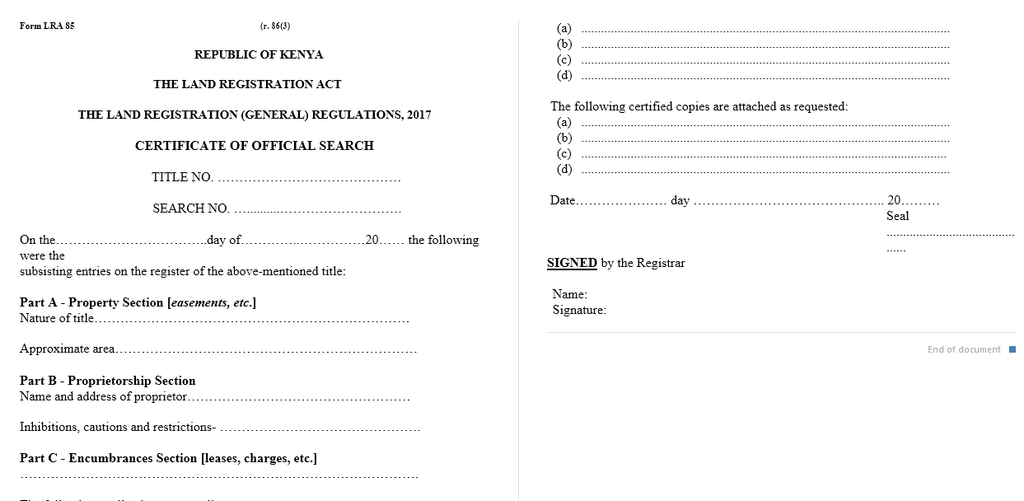
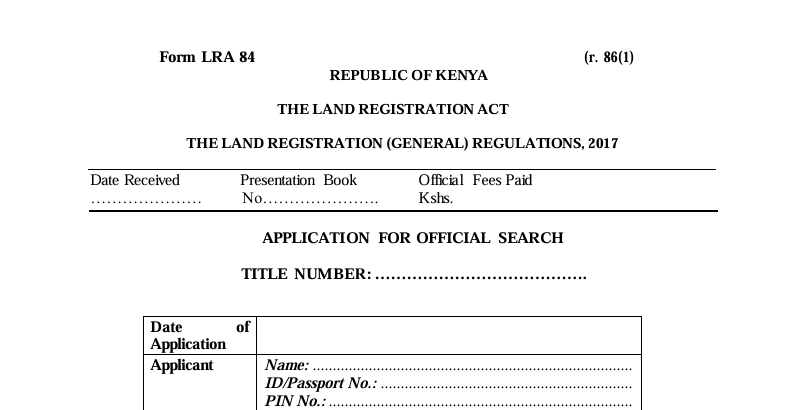
This makes the official search a vital step in land due diligence before entering into any transaction. The State Department for Lands provides two forms: Form LRA-84 for applying for a search and Form LRA-85 for the Certificate of Official Search.
How to Apply for an Official Land Search in Kenya
The process for applying for a land search can be done online where services are available such as through Ardhisasa or manually at the land registry depending on location and access.
1. Have the parcel details
Before beginning make sure you have the right information:
- Title or parcel number
- Registration details
A small error in the parcel number can lead to searching the wrong property and is especially important if nearby parcels have almost similar numbers or if the land has been subdivided, merged or changed in other ways.
2. Access the land registration service
For areas where online services are offered applicants can use the Government’s land information platform. Ardhisasa is a government system that gives access to land-related services. Its FAQ explains that a search is used to confirm ownership details and other interests recorded on a property. In places where services are handled manually follow the application process at the local land registry.
3. Submit the information
According to the guidelines from the State Department for Lands the basic requirements include:
- A completed application form
- An identification document
- A PIN certificate
The Ministry also provides Form LRA-84, which’s the prescribed application form.
4. Pay the search fee
Check the current fee at the time of application because government fees and payment methods may change. Payment must be made through the Government payment channel linked to the service.
5. Obtain the Certificate of Official Search
After processing the applicant receives the Certificate of Official Search. This document should be reviewed carefully before moving with any land transaction.
Why Is an Official Search Important?
1. It helps confirm ownership
When buying land one of the first things to ask is: Who is listed as the owner?
An official search pulls data from the land register to show who is legally registered as the owner. This is essential because the person trying to sell the land might not actually be the registered owner.
2. It can reveal encumbrances
A property may look perfectly fine when viewed on the ground but still have problems recorded in the registry. An official search can uncover issues such as:
- Charges (like loans secured against the land)
- Cautions (warnings about claims)
- Restrictions (limitations on how the land can be used)
- Other registered interests
For example if the land was used as collateral for a loan, a buyer who skips the search could end up making a deal without knowing the full legal position.
3. It helps identify problems before money changes hands
Land transactions often involve significant sums of money. Conducting a search before paying anything gives the buyer a chance to spot problems early. It’s much better to find a problem during diligence than after the purchase is complete.
4. It is a part of land due diligence
An official land search in Kenya should not just be seen as another form to fill out. It is a core check that should be included in any land due diligence process. For development projects and other land activities, government guidance emphasizes the need for searches along with survey information and other relevant data.
What Many People Get Wrong About an Official Search
This is where many people make mistakes and costly ones.
- An Official Search does NOT replace a survey
These are two checks. An official land search focuses on information recorded in the land register while a land survey search looks at survey records, plans and maps. According to the State Department for Lands a survey search can provide details such as:
- Boundary dimensions
- Beacons
- Survey numbers
- Survey plans and maps
- Historical changes to the shape of the parcel
The Ministry clearly says these are services that matters because even if you have a search showing your seller is the registered owner it doesn’t mean the physical boundaries match what’s shown on the title. That’s why a full land due diligence process needs both:
- An official search
- Survey verification
A registered land surveyor can review the survey records locate the parcel on the map and if needed, check or re-establish the boundaries on the ground.
Another Common Mistake is assuming a Title Means Everything is Fine
A title deed is proof of ownership but land due diligence should go beyond just looking at the title. Buyers should ask:
- Does the registered owner match the person selling the land?
- Are there any registered encumbrances?
- Does the parcel in the survey records match the land on the ground?
- Are the boundaries and beacons clear and visible?
- Are there buildings, access problems, easements, wayleaves or other issues needing attention?
These questions cannot all be answered by reading a title deed. The two types of searches work together and they support each other but do not replace each other.
When Should You Conduct an Official Search?
You should do a search before:
- Buying land
- Paying a large deposit for land
- Accepting land as security
- Transferring ownership
- Entering into certain land transactions
- Doing property due diligence
- Starting major development or investment decisions
For land deals requiring approval from the Land Control Board, an official search is also one of the documents needed in the consent process.
The Bottom Line
Never buy land based on a title deed. An official search gives you information from the land registry showing ownership and any interests affecting the property but it’s only one part of proper land due diligence.
At GeoEdge Land Surveyors we know that buying land is more, than looking at a title deed. Proper survey verification helps you understand where your parcel is, how it relates to neighbors and whether the survey records match what’s actually on the ground.

